How to Play Werewolf (Mafia): Rules, Roles and the Best Apps in 2026
The full rules of Werewolf and Mafia in plain English, the roles that matter, how many wolves for how many players, and the apps we actually checked in the stores in August 2026, ranked by one question: does anyone still have to sit out and moderate?
Every good party has the same ten minutes: somebody says "let's play Werewolf", three people start explaining slightly different rules, someone hunts for paper and a pen, and one friend sighs and agrees to be the moderator, which means agreeing not to play. Great game, terrible setup.
This guide is here to shrink those ten minutes. Where the game comes from and how Mafia became Werewolf, the roles worth using and the order they wake up in, how many wolves for how many players, how to play with no cards at all, and which apps really work in 2026. Our own game sits at number one in the ranking, so we say up front what it does differently and why.
Werewolf or Mafia? Where the game comes from
Mafia was invented in 1986 by Dmitry Davidoff, a psychology student at Moscow State University. The idea was simple and turned out to be immortal: a small informed group (the mafia) eliminates one person each night, and the uninformed majority (the town) tries to find them by day and vote them out.
Werewolf is the same mechanism in a different costume. In 1997 Andrew Plotkin swapped mobsters for werewolves and the town for a village, on the theory that nobody quite believes in the mafia but everybody believes in a werewolf. In 2001 two French designers published the card version, The Werewolves of Miller's Hollow, which is still the boxed game most people own.
In practice the differences are cosmetic. Mafia is usually the no-props version with a detective and a doctor. Werewolf adds a seer, a hunter, a witch, Cupid and a dozen more characters, because it has cards to print them on. The rules below work for both.
The roles: who is who in the village
A basic game needs four roles. Add the rest once your group knows the rhythm, because every extra character is one more wake-up call at night and a longer round.
Werewolf (Mafia). Knows the other wolves. Each night the wolves agree on a victim. They win when they equal the number of remaining villagers.
Villager (Townsperson). No power beyond a vote by day and the ability to read people. Most of the table are villagers, and they are the ones who win or lose this game.
Seer (Detective, Cop). Each night points at one player and learns whether they are a wolf. The strongest role in the village, which is why the wolves hunt the seer first.
Doctor (Medic). Each night protects one player. If the wolves picked that person, nobody dies at dawn. Many groups forbid protecting the same player twice in a row.
Advanced extras: Hunter (takes someone down when eliminated), Witch (one healing potion and one poison for the whole game), Little Girl (may peek at night and risk her life), Cupid (links two lovers who die together).
How to play Werewolf step by step
One person moderates: deals the roles, calls night and day, wakes each role in turn and announces what happened overnight. The moderator knows everything and does not play. Everyone else sits in a circle where each player can see every other. A full round goes like this:
1Deal the roles. Slips of paper, playing cards or an app. Everyone looks at their role and hides it. Nobody says what they are, however much they want to.
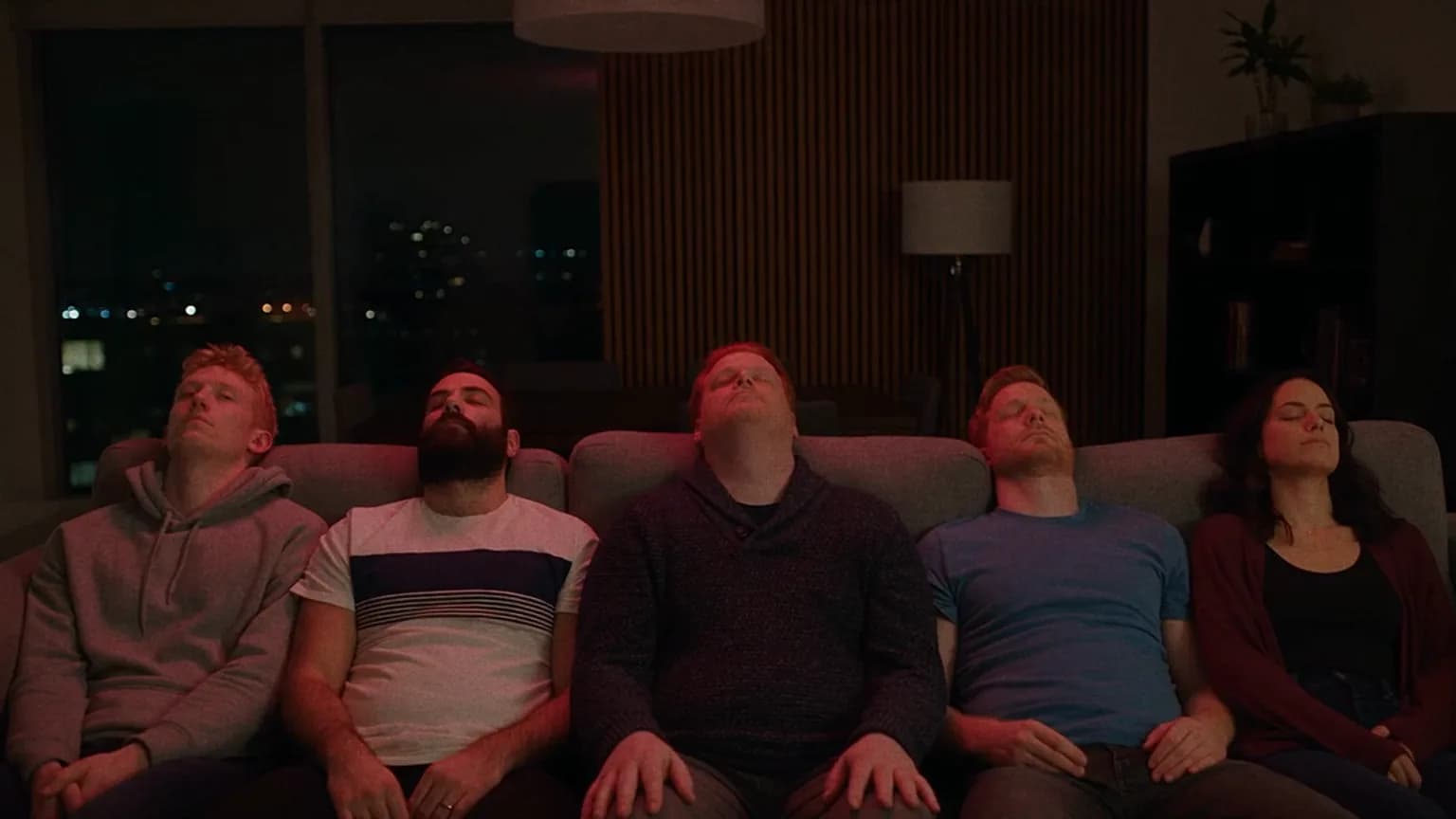
2Night falls. Everyone closes their eyes. The moderator wakes the werewolves. They open their eyes, find each other and silently point at a victim. They close their eyes.
3The seer wakes up, points at one player, and the moderator nods (wolf) or shakes their head (not a wolf). The seer closes their eyes.
4The doctor wakes up and points at someone to protect, themselves included. Eyes closed.
5Day breaks. Everyone opens their eyes. The moderator announces who died in the night, or that nobody did if the doctor guessed right. The victim reveals their role and stays silent for the rest of the game.
6Discussion. Set a timer, because without one this phase never ends: three minutes for a small group, five for a big one. Anyone can accuse, defend and lie. Especially lie.
7The vote. Everyone points at one player. The most votes gets lynched and reveals their role. A tie means nobody dies. Then night falls again.
8Game over. The village wins when the last wolf is dead. The wolves win when they equal the villagers, because at that point the vote can no longer save anyone.
How many players, how many wolves, and the no-cards version
Rule of thumb: one werewolf for every three to four players. Too few wolves and the game is over in two nights; too many and the village never stands a chance. Proportions that work:
5-6 players: 1 werewolf, a seer, everyone else a villager. Short, good for learning.
7-9 players: 2 werewolves, a seer, a doctor. The sweet spot for a house party.
10-12 players: 3 werewolves, a seer, a doctor, a hunter. Discussions get long, use the timer.
13-18 players: 4 werewolves plus extra roles. Beyond that, split into two tables.
No cards: write the roles on paper, or deal a normal deck (aces are wolves, the king is the seer, the queen is the doctor, everything else is a villager). Works the same, looks worse.
One Night Ultimate Werewolf: 3-10 players, a single night, nobody is eliminated, one vote decides everything. Ten minutes, perfect as a warm-up.
Best Werewolf apps and games for your phone (checked August 2026)
We checked every entry in the App Store and Google Play on 28 August 2026. Criterion one: does the app solve the moderator problem, or does someone still have to sit out to run the game? Criterion two: are you playing in one room, or is everyone looking at their own screen? The order is ours and, as the first entry makes obvious, we are not pretending to be neutral.
01
Werewolves: Prime Time Moon (Buzzin)
Coming soon
The TV is the narrator, the phones are the controllers, nobody sits out
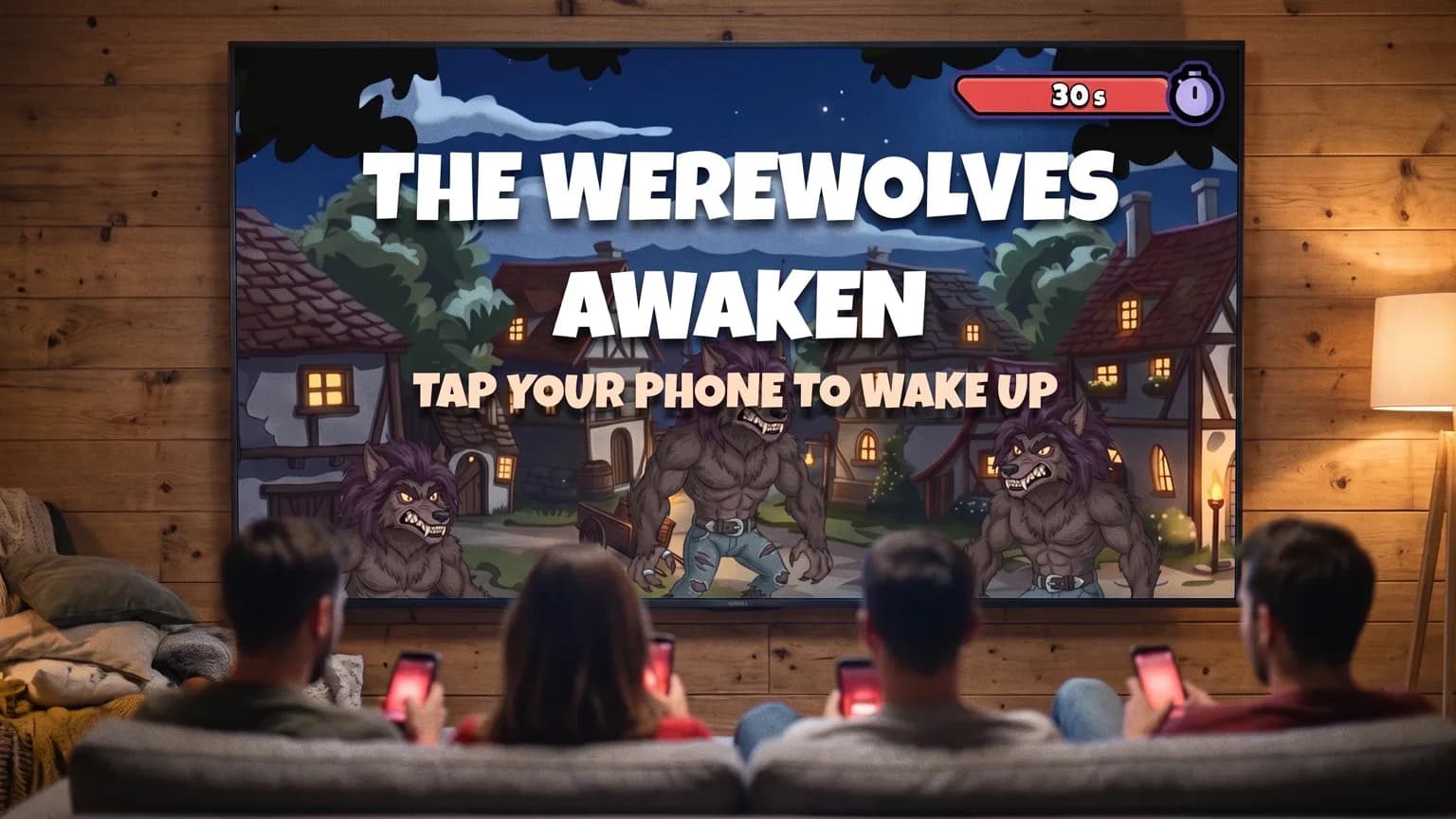
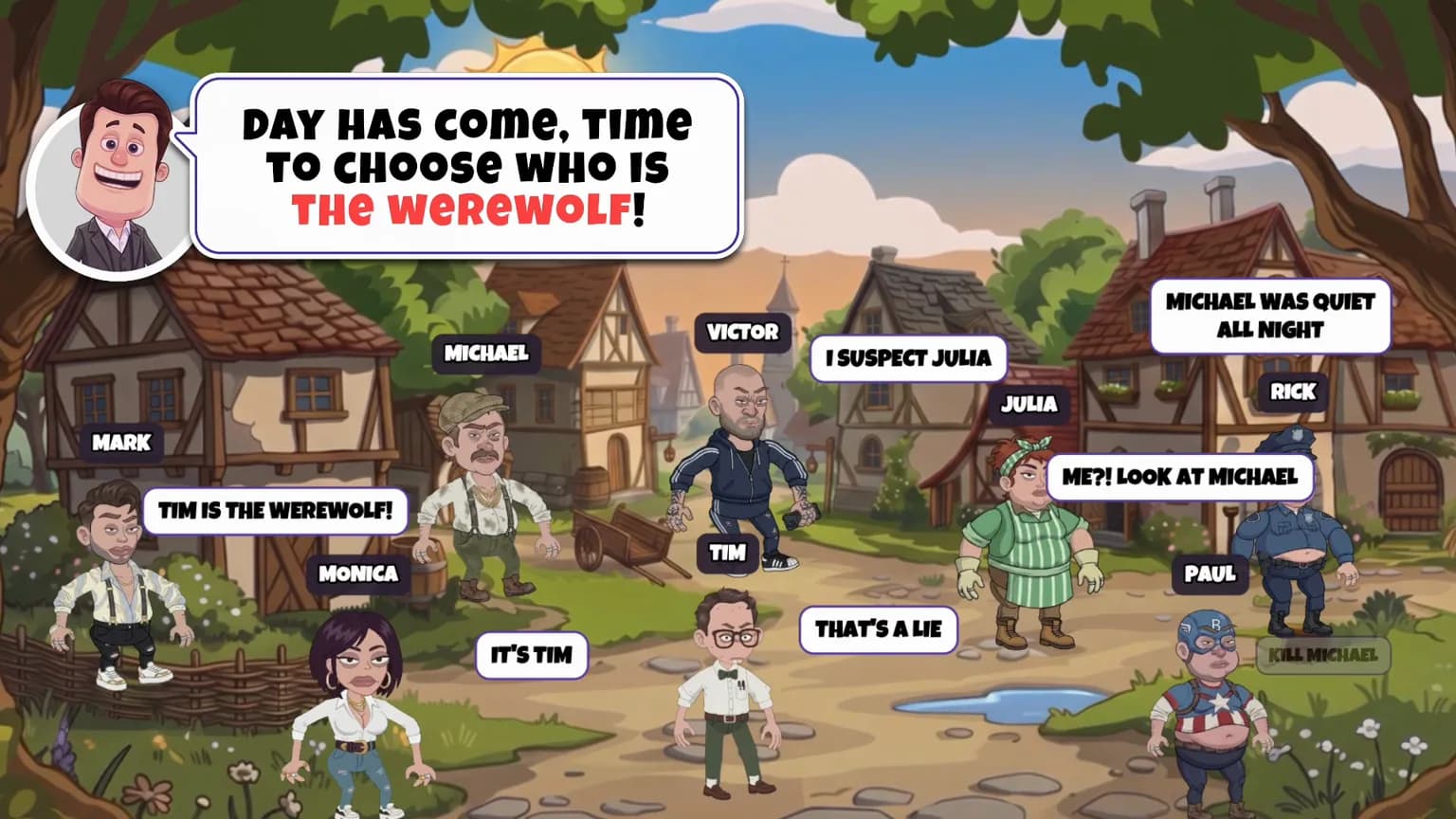
Werewolves on the Buzzin platform runs in your TV's browser. Guests type the room code into their phones and get their roles on their own screens. The TV's narrator calls the night, the wolves pick a victim on their phones, the seer checks, the doctor protects, and at dawn the whole village sees on the big screen who is missing. The discussion happens out loud at the table, exactly like the classic, only the vote goes through the phones and nobody counts hands.
The one difference from everything below: there is no human moderator. The game runs itself, so the whole group plays. It is in the works; the trailer is at the end of this article.
Best for a group in one room that does not want to nominate anybody to moderate. One TV and that is it.
The official narrator app for One Night Ultimate Werewolf, if you own the cards
The free companion app reads the night and times the day for One Night Ultimate Werewolf, so nobody needs to moderate. It is kept up to date (iOS version from December 2025) and it works with one phone on the table. The catch is the box: it needs the physical cards, and in August 2026 the game shows "notify me" at the publisher and thin stock on Amazon.
The best pick if the box is already on your shelf.
One phone for the whole table, offline, but a human still moderates
Holds the roles and the night order; you can pass a single phone around the circle or link a few phones on local Wi-Fi with no internet. Basic roles are free, extra ones cost a couple of dollars. The catch: it is a moderator's helper, not a moderator. Someone still reads and wakes people up.
Good for a cabin weekend with no signal, when someone enjoys running the game anyway.
Werewolf online with strangers, everyone on their own phone
The biggest app in the category: over 10 million Android downloads and an iOS update from August 2026. Fully automatic, up to 16 players, dozens of roles, a chat box instead of a conversation. It is a good game, but a different one: you are not playing together at a table, you are playing next to each other on the internet. Free with ads and in-app purchases.
For a solo werewolf fix at midnight, not for the crew on the sofa.
Fifty-plus roles, seven to fifteen players, fixed timers, all online
Free to play on Steam, iOS and Android, updated in July 2026. The deepest rule set here and the least party-like: strict timers, a big role list to memorise, and players you have never met. Great for people who already love the genre, heavy for a first game.
For veterans who want more roles, not for the kitchen table.
Werewolf in virtual reality, five to eight players, each with a headset
Ubisoft's VR take on the game is still on sale on Steam and PlayStation, and the round-the-campfire staging is charming. It is VR only, which means everyone needs a headset, which means it is not a party game unless your party owns five of them.
Cards have one advantage over slips of paper: the roles explain themselves through the pictures. Here is where the boxes stand in August 2026:
The Werewolves of Miller's Hollow (Zygomatic / Asmodee): the 2001 classic, 8-18 players, about 30 minutes, around 13 dollars and in stock. If you buy one box, buy this one.
One Night Ultimate Werewolf (Bezier Games): 3-10 players, ten minutes, no moderator thanks to the free app. Listed at 29.95 dollars but showing "notify me" at the publisher and patchy Amazon stock, so check before you promise it to anyone.
Blood on the Clocktower: the deluxe end of the genre, 5-20 players, 160 dollars, on pre-order. It needs a dedicated Storyteller, so it moves the moderator problem in the opposite direction.
A normal deck of cards plus this article: zero dollars, works tonight.
One TV and that is it: how Werewolves works in Buzzin
Werewolves: Prime Time Moon, official trailer
Buzzin is a party game platform with one screen on the wall and every guest playing on whatever is already in their pocket. In Werewolves that means the TV takes the narrator's chair: it calls the night, wakes the wolves, the seer and the doctor, shows at dawn who is gone, and counts down the discussion. The phones get the roles and the buttons, so nobody peeks over a shoulder and nobody counts votes.
The result is that the person who always used to moderate gets to play. The rules are exactly the ones above, minus explaining them at the table: everyone gets their role and a two-line briefing on their own screen.
The game is in the works. If you want to see it first, or tell us what you would change, our Discord is linked from the homepage.
What you need
A TV with a browser (smart TV, Chromecast, a laptop on HDMI) and your guests' phones. Nothing to install: the room code goes into a browser.
Frequently asked questions
Are Werewolf and Mafia the same game?
Yes. Same mechanism: an informed minority eliminates at night, the majority votes by day. Mafia (1986) is older and usually played without props; Werewolf (1997, card version 2001) has more roles because it has cards. The rules in this guide work for both.
How many people do you need to play Werewolf?
The classic moderated game makes sense from 6 people (5 players plus a moderator) and is best at 8-12. One Night Ultimate Werewolf works from 3 players. Above 18, split into two tables.
How do you play Werewolf without cards?
Write the roles on paper and deal them face down, or use a normal deck: aces are wolves, the king is the seer, the queen is the doctor, the rest are villagers. One person moderates. If you do not want to sacrifice anyone as moderator, you need an app that runs the game itself, such as Werewolves in Buzzin.
What is the best Werewolf app that does not need a moderator?
For a table with the physical cards, Bezier's free One Night app. For an online game with strangers, Wolvesville. For a group in one living room with no cards and no moderator, Buzzin puts the narrator on the TV and the roles on the phones.
Who should moderate, and what if nobody wants to?
The best moderator knows the rules and likes to talk, because they set the pace and the mood. If nobody wants to sit out, you have two ways forward: the One Night version with an app reading the night, or a platform where the TV is the narrator.
Written by
Eryk Kruk · Buzzin Founder
I build Buzzin and test every one of these games at my own game nights. Got a question about this piece, or an idea for the next one? Write me: contact@playbuzzin.com